


Nigeria has a new stash to tackle its food problem, but concerns about the government’s processes remain.
Nigeria has raised over $500 million to boost its struggling food sector and bring security reforms to its Northeastern region, where insurgents have forced farmers out of their lands. But the government’s unclear intentions for the money raises questions about recycled promises.
According to vice president Kashim Shettima, the $500 million will be used for “innovation finance for food system transformation, development of Nigeria’s agro value chain, and special agro-industrial processing zone programmes.”
While it is good news that the presidency has mobilised half a billion dollars for Nigeria’s agricultural sector, questions remain about the clarity of implementation processes for the proposed reforms. “Food system transformation” does not communicate, explicitly, the government’s intention for an agricultural sector in dire straits.
Also, the imprecise plans for agro-chain development and the “development of agro-processing zones” raise concerns about the recycling of government intentions with new funds. In October 2022, former president Muhammadu Buhari launched special agro-processing zones in eight states across Nigeria. Then-vice president Yemi Osinbajo described the initiative as a game-changer that will boost food production in the country. But almost a year after the $538 million project, which drew in notable investors like the African Development Bank and the International Fund for Agricultural Development, Nigeria’s food problem has only worsened.
“Nigerians deserve more transparency from the government, especially in matters like this that threaten their living standards. We need to know where we are as a country. The last thing we need now is recycled promises that inform us of new money but hardly make bring in changes,” said Chinweike Uche, an agricultural consultant in Lagos.
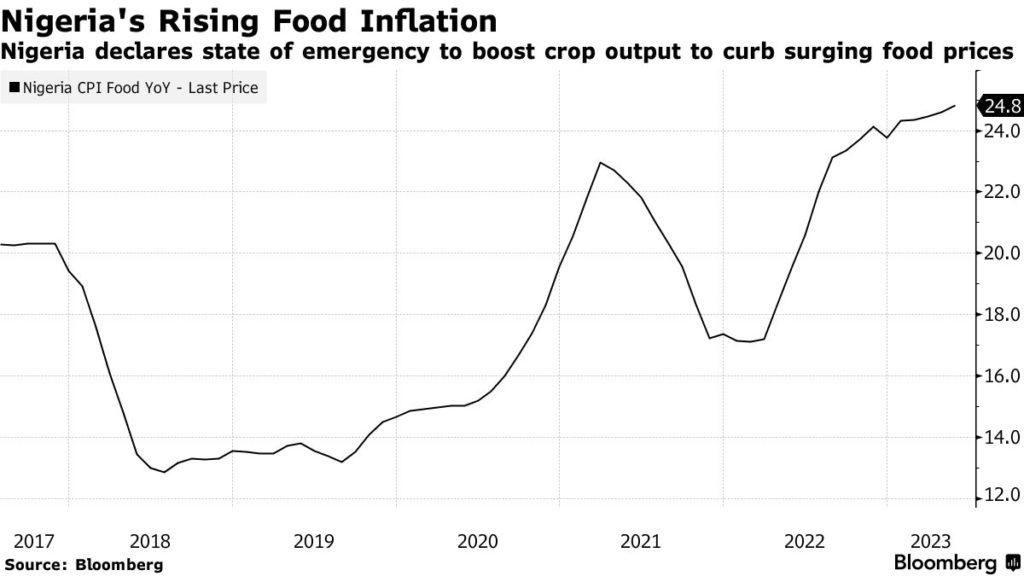
This report follows Nigeria’s declaration of a state of emergency last week, a move the government says will enable it to take urgent and important steps to tackle the country’s food problem. Food remains the highest driver of inflation in the West African country, which has seen its inflation rise to an 18-year high of 22.7%.
The state of emergency came with some promised reforms such as clearing large areas for farming and introducing a commodity board. TechCabal has argued separately that the board is unlikely to succeed.
The sources of the $500 million inflow were not disclosed, but the presidency confirmed contributions from “international finance organisations”. Recall that earlier in July, President Tinubu asked lawmakers to approve $500 billion ($638 million) of spending to cushion the effect of subsidy removal. And according to Dele Alake, President Tinubu’s spokesman, cost-savings from fuel subsidy removal were going to be used in revamping the agricultural sector. It is not clear whether such cost savings contributed to the freshly mobilised $500 million.
“The president has already approved the infusion of a huge quantum of funds towards the repositioning of our security architecture,” vice president Shettima said. “We are repositioning our security architecture to provide support for farms and farmers.”